
Telling Your Story through Setting
Lessons from Ireland

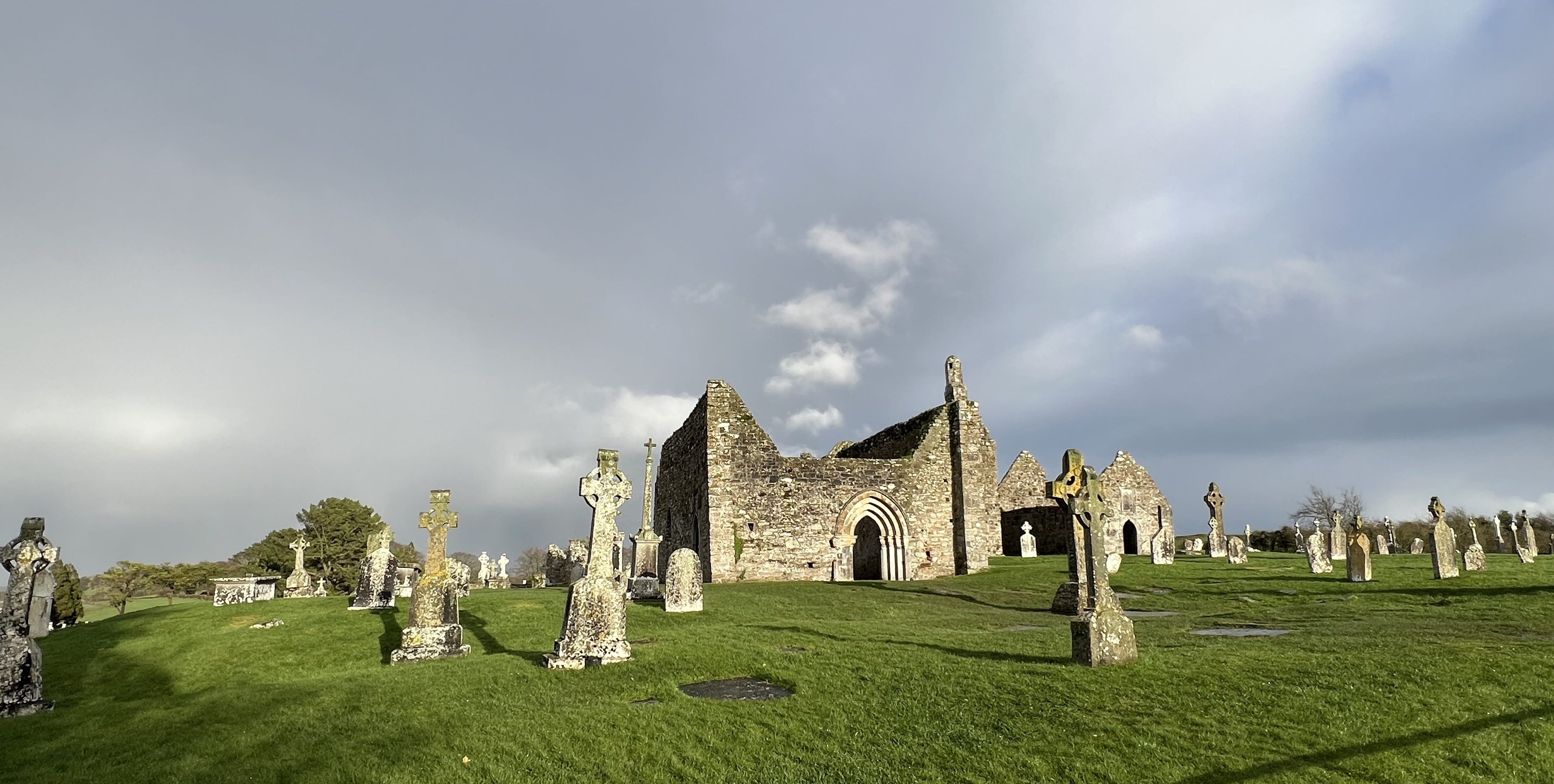
For the last ten days, I have been on vacation, a bucket list trip to Ireland. Thanks to my smartphone and every TV in the pubs we frequented, I also managed to keep up with the carnage and chaos swirling around the world while meandering the pastoral scenes of rural Hibernia.
I felt a little guilty.
But I also took this time away with my husband as the gift we had been waiting on for years. So, between tracing the counties where my forefathers and mothers once lived, to driving the Wild Atlantic Way (and by driving, I mean riding, since my husband was the only registered driver on our rental), to tracing around muddy monastery ruins, and touring majestic castles … I’ve spent ten days encountering the clash of history and current events.
An Ancient Citadel Church
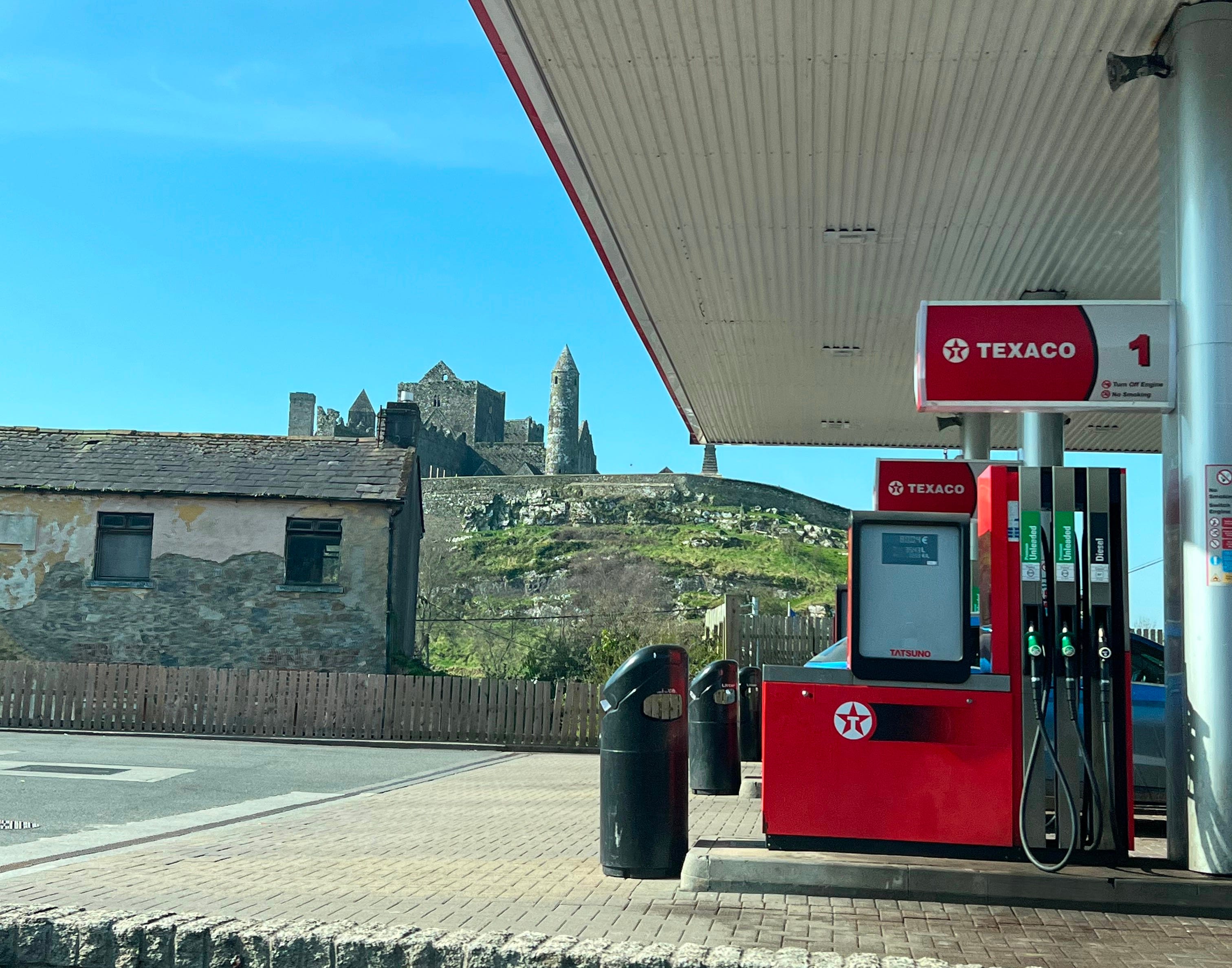
The Irish have made an art of making peace between past and present. One of my favorite photos was snapped hurriedly as we drove through the town of Cashel. Immediately in front of me is a Texaco gas station, but caught in the background is the Rock of Cashel, the thousand-year-old castle high on a hill overlooking the region where Brian Boru himself, the high king of Ireland, reigned.
The McCarthys held the Rock for six hundred years until the O’Briens, with Brian Boru leading them, captured it and defeated their enemies. Within a hundred years or so, however, the McCarthys were making a comeback. The O’Briens, seeing the writing on the wall, turned around and gifted the Rock to the church.
Game over.
[When I told our tour guide that I was a McCarthy (my mother’s mother’s mother was Julia McCarthy), he quipped, “Come to claim the old place again, eh?”]
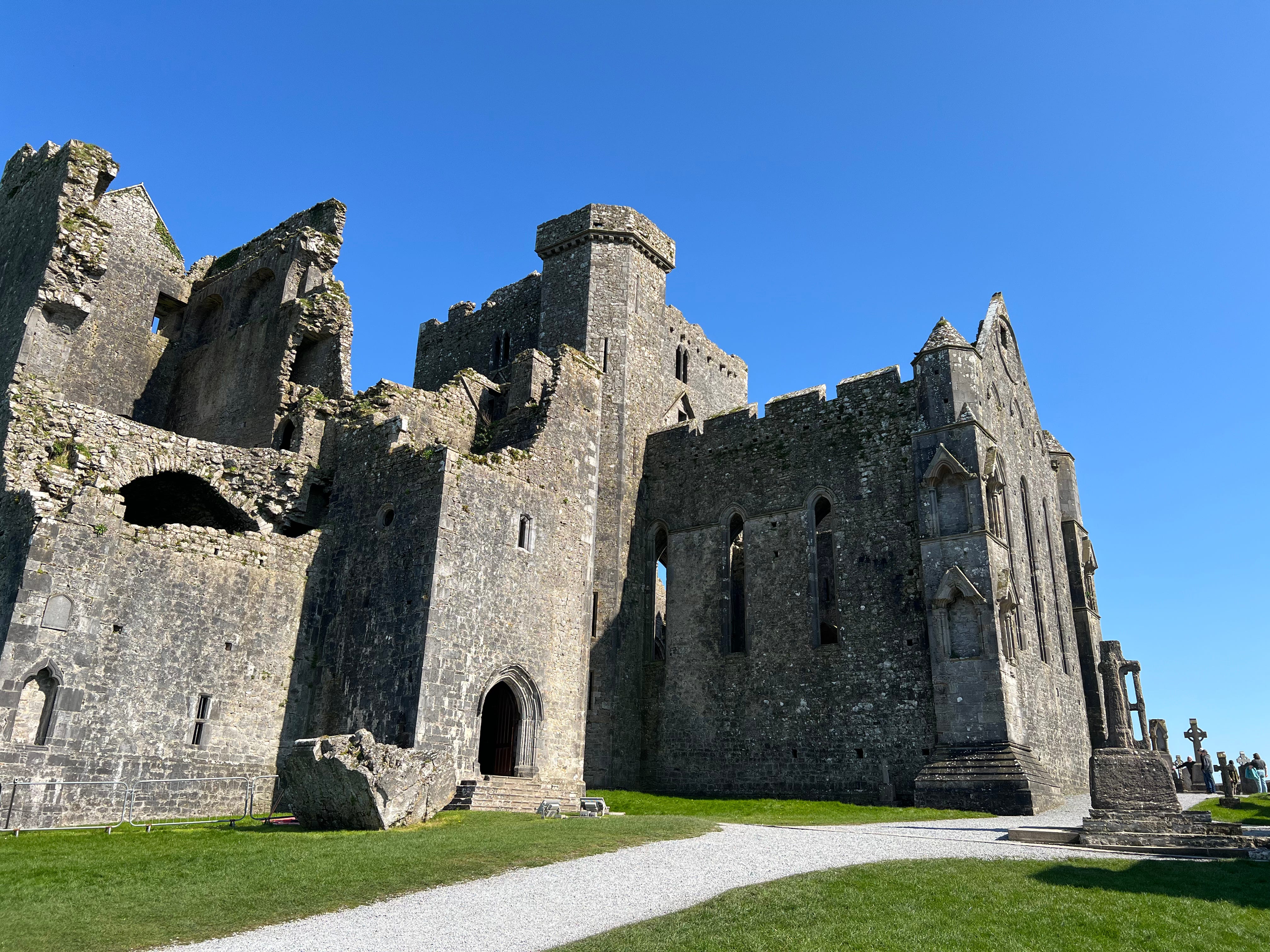
The Rock of Cashel went from a symbol of political and military influence to a symbol of spiritual authority. The transfer of power from political to ecclesial explains the odd collection of buildings on the Rock—a round tower, a high cross, a Romanesque chapel, a Gothic cathedral, an abbey, the Hall of the Vicars Choral, and a fifteenth-century Tower House. Today, though a ruin thanks to the English wars of occupation, the Rock of Cashel is a monument to the history of Ireland—war and peace, church and state, Irish and English, Catholic and Protestant.
A Modern Redemption
On our last day of travel, we visited Dublin Castle, which sits in “city centre,” smack in the middle of the capital city. It is one of the rare castles we saw intact and in use. For 700 years, from 1204 until Irish independence in 1921, it was the seat of English (and then British) rule in Ireland. It now serves the Republic of Ireland as a government complex and an arena of state ceremony.
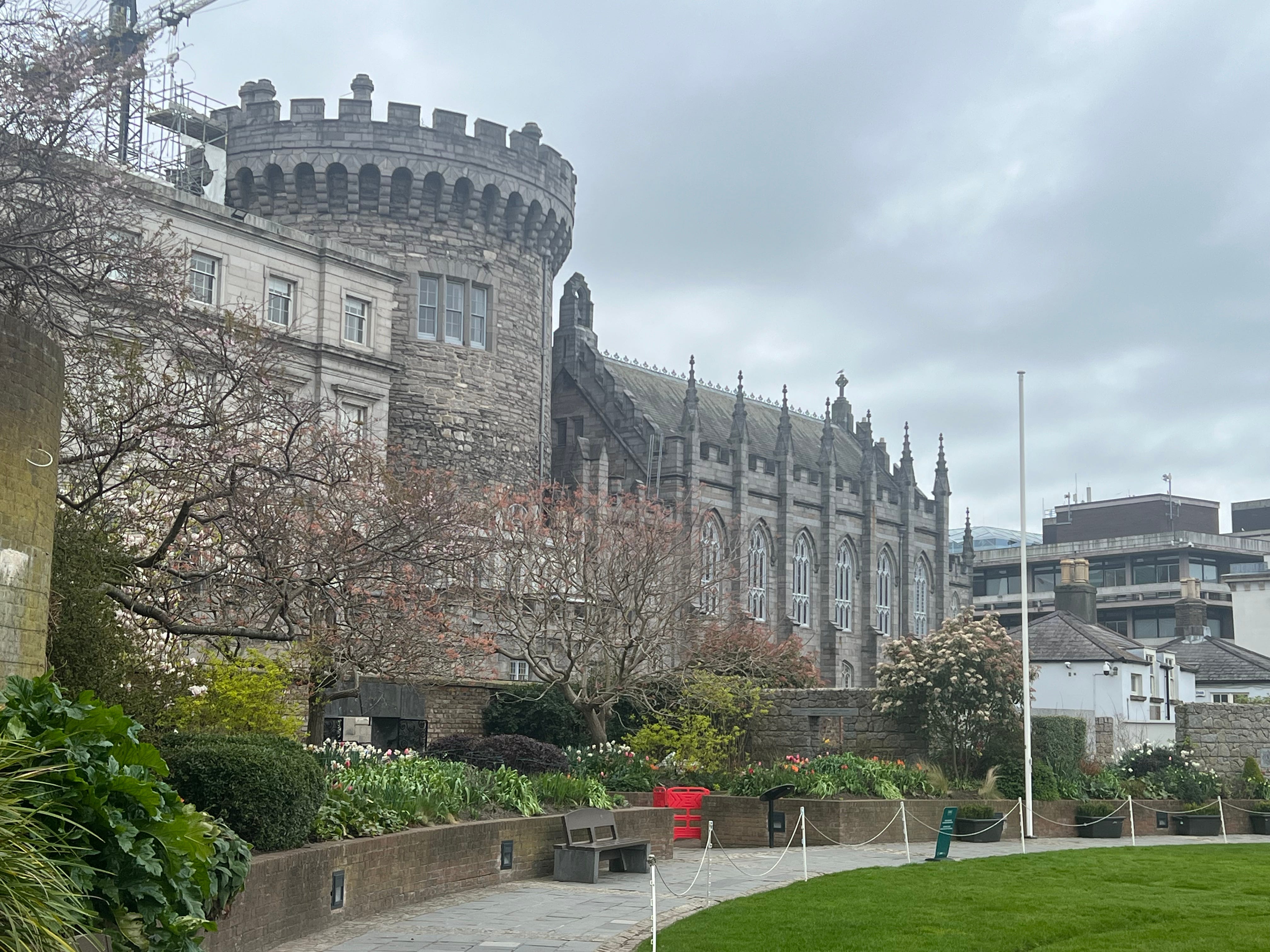
The Irish turned a massive setting and symbol of oppression into a place where an independent, free nation conducts business with its former oppressors and others. Past and present sit side by side, telling the stories of past evil, courageous struggles for freedom, and current independence and cooperation. The throne room now holds each new president of Ireland as he or she is inaugurated. Queen Elizabeth II herself stayed in the castle as a visitor.
The story of Ireland is told in its places. So, too, in Scripture, we find significance in a story’s setting.
Setting Speaks
I recently spoke with Dr. Sandra Glahn on her podcast, The Chick Report, about the elements of story and how they can help us understand Scripture more fully. One such element is setting. Land, culture, tradition, colors, objects, and more … these elements of setting deepen our understanding of the text. Why do the Israelites find such significance in the land of Canaan? What would John 4 mean without its location in Samaria? How do we understand 1 Timothy without knowing the Roman city of Ephesus and its Artemis influence? Setting offers situational context to each story—and context is critical to correct understanding.
Setting works in a similar way for us. The Irish remember their history via the land, monuments, ruins, and recapitulated spaces. They actively remember their painful past to better know themselves and what values they hold. They’ve turned places of previous pain into celebrations of freedom. Often a setting remembers joyful times, too.
Upon our return home from the trip, we were greeted by a mountain of mail, including some packages. I squealed when I saw the long cardboard tube—I knew it held a rolled-up doctoral diploma inside. It’s just a piece of paper, right? To you, maybe, but to me it holds years’ worth of study, relationships, spiritual growth, and intellectual rigor. Though a mere object, it tells a story important to me.
Which places and objects help you tell your story?
I enjoyed “our” trip immensely. ;)